By mid-October most homes have quietly changed. Lamps go on earlier, the heating clicks in, and the pale palette that felt crisp in July starts to look thin. Display shelves show it first: the same white ceramics and clear glass that worked in summer now read as chilly.
The fix is the cheapest decorating there is. No paint, no new furniture — just a few warm tones, something dried, and better light. An afternoon is enough.
Start with a colour reset
Autumn styling works on a narrower, warmer palette: rust and terracotta, ochre, clay, amber, deep olive, chocolate brown, a faded plum. These sit naturally against what most shelving already has — off-white walls, oak or walnut, black metal brackets.
Choose two or three warm tones and one darker anchor colour. That is your scheme, and anything that doesn't fit it goes in a box marked for spring. Before you buy anything, gather the warm-toned objects you already own on the floor in front of the shelf: a brown glass bottle, a copper dish, a cream stoneware jug, a burnt orange book spine, a woven basket. Most people find they have more than they think, and that swap alone freshens the shelf noticeably.
Let dried foliage do the work
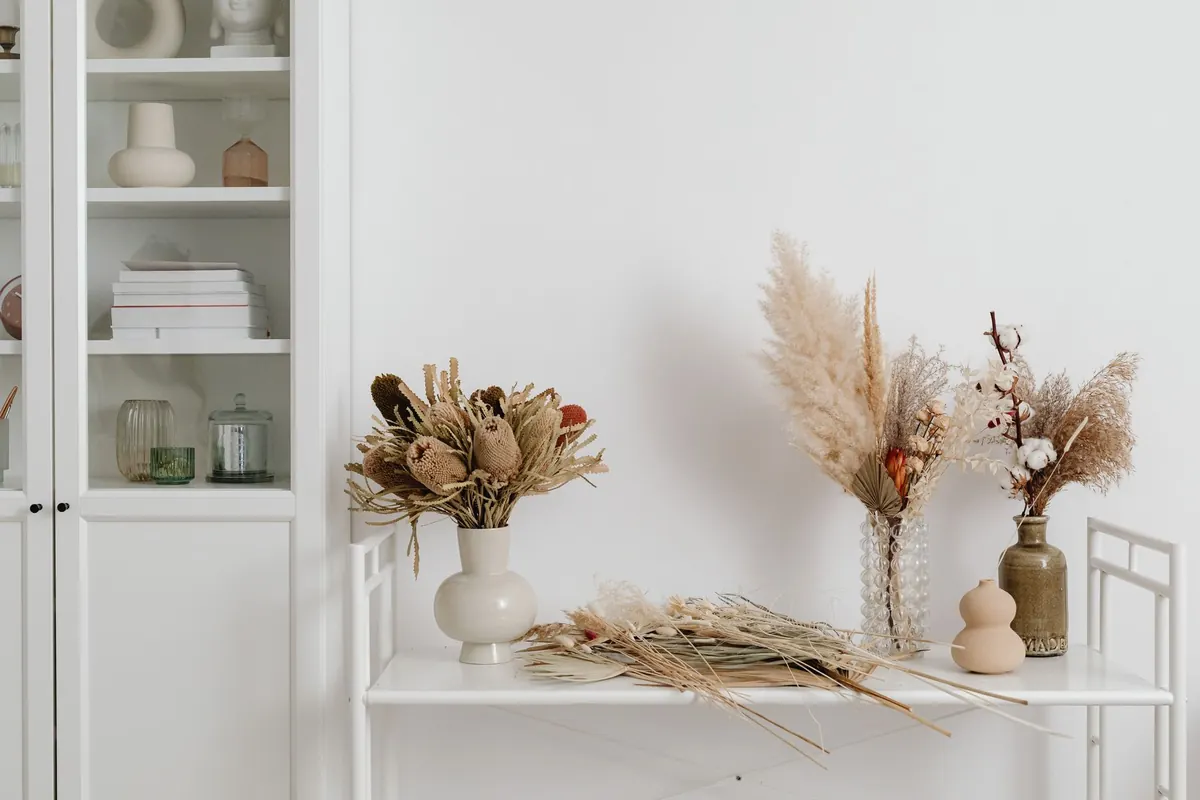
Nothing says autumn on a shelf more efficiently than dried material, and it is forgiving. It needs no water, drops no petals on your books, and holds its shape for months.
- Dried hydrangea heads, which give volume and papery texture from a single stem
- Eucalyptus, especially small-leaved varieties, for a muted grey-green that flatters warm tones
- Seed heads — allium, nigella, honesty, teasel — light, sculptural, and free if you gather your own
- Grasses and wheat, bunched into a slim vase for height
- Dried orange slices, cinnamon sticks and pine cones for a shallow dish or tray
A simple arrangement beats a busy one. Try a tall bundle at one end of the shelf and a low bowl of heavier heads at the other, leaving the middle clear for objects worth looking at. If a vase feels unstable, weight the base with clean pebbles or a handful of dry rice.
Two practical notes. Dried stems are brittle, so handle them over a bin and expect some shedding. A light mist of hairspray is often suggested to hold them together, but it attracts dust and can dull the colour — keeping them out of direct sun is the better defence against fading. And keep them out of steamy rooms; dried material in a bathroom goes limp, then mouldy.
Candles and the quality of light
Autumn shelves live or die on light. Overhead lighting flattens everything, whereas a few small sources at shelf level — a candle, a tea light in a glass, a tiny lamp — will do more for the mood than any object you place there.
Vary the heights. Two stubby pillars and one taller taper look deliberate; six identical tea lights in a row look like a hotel lobby. Unscented is usually the safer choice on a shelf, particularly if you already have a scented candle elsewhere in the room, since two strong fragrances competing in a small space rarely works. Where you want the look without a flame, a good battery candle with a warm flicker is perfectly respectable.
Safety matters more here than almost anywhere else at home, because shelves put flames close to paper, wood and dried foliage. Use a heatproof holder with a wide base, trim wicks to about 5mm before lighting, and never place a candle directly beneath the shelf above — the heat will scorch it. Keep flames well clear of anything dried, and never leave a lit candle unattended or within reach of children and pets.
A three-layer method that always looks considered
If you would rather follow a formula than improvise, build each shelf back to front.
- Back layer: height and a backdrop — tall stems, a leaning picture, a large book, a tall bottle.
- Middle layer: mass — a stack of books laid flat, a bowl, a pair of similar objects.
- Front layer: the close-up details — a candle, a small dish, one pine cone, a brass trinket.
Then step back and remove one thing. Shelves look better with roughly a third of the space left empty; the gaps let each object breathe and stop the arrangement reading as clutter. Odd numbers tend to sit more comfortably than even ones, though that is a convention rather than a rule.
Texture, trays and finishing touches
Warmth comes from texture as much as colour. A length of linen or a wool runner softens a hard shelf edge and ties two levels together. A shallow tray corrals a group of small objects so they read as one item instead of five — the single most useful trick for keeping display shelving tidy. Mix finishes deliberately: matte ceramics, aged brass, dark glass, raw wood. One glossy accent is plenty.
Keeping it going into winter
Nothing here is fixed. As November turns to December, swap grasses for a sprig or two of evergreen, replace dried orange with a bowl of walnuts, and add a second candle. Dried stems can be stored loosely in a paper bag in a dry cupboard and reused next year; shake them out and they will do another season.
One last practical point: seasonal styling often means heavier objects — stoneware, glass jars, bowls of cones. Put the weight low. If your shelving is wall-mounted, check the fixings before you load it and spread heavy pieces across separate shelves rather than grouping them above eye level.
Refresh one shelf rather than all of them, and do it as the light starts to go — that is the moment you will notice what is working. A small, warm, well-lit shelf does more for a room in November than most people expect.